6th Hel.A.S. Astrophysics Summer School

Europe/Athens
Department of Physics, NKUA

Department of Physics, NKUA

University Campus GR-157 84 Zografou, Athens
Description

Description

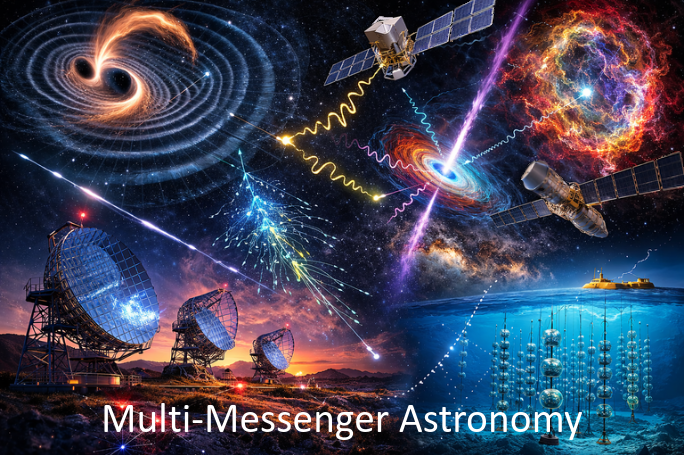
The Hellenic Astronomical Society (Hel.A.S.), in collaboration with the  Department of Physics of the National and Kapodistrian University of Athens (NKUA), under the initiative to offer knowledge and scientific training to the younger members, graduate students and young postdoctoral researchers of the Society, is organizing the 6th Summer School on "Multi-messenger Astronomy".

The main topics to be addressed are: 

  • Gravitational waves
  • Cosmic rays at low and ultra high energies
  • Astrophysical neutrinos 
  • Gamma-rays and X-rays
  • Machine learning and deep learning applications 

Confirmed lecturers (alphabetical order)


Sponsors


    • 09:00 09:30
      Registration with coffee
    • 09:30 09:45
      Welcoming address by HelAS President
      Convener: Despina Hatzidimitriou (National and Kapodistrian University of Athens)
    • 09:45 11:00
      Summer School Jamboree

      Round-table introduction of participants

    • 11:00 12:00
      Lectures: X-ray missions current and future - G. Vasilopoulos
    • 12:00 13:00
      Lectures: Astrophysics with GeV gamma rays (Fermi) - S. Buson
    • 13:00 14:30
      Lunch Break
    • 14:30 15:30
      Lectures: Astrophysics with VHE gamma-rays (CTA) - M. Cerruti
    • 15:30 16:30
      Lectures: VHE gamma-ray detection and analysis - M. Cerruti
    • 16:30 17:00
      Coffee Break 30m
    • 17:00 18:30
      Labs: GammaPy - M. Cerruti
    • 09:00 10:00
      Lectures: UHECRs: experimental results and astrophysical importance - F. Oikonomou
    • 10:00 10:30
      Coffee Break 30m
    • 10:30 11:30
      Lectures: Astrophysical sources of UHECRs - F. Oikonomou
    • 11:30 12:30
      Lectures: Astrophysical high-energy neutrinos - M. Petropoulou
    • 12:30 14:00
      Lunch Break
    • 14:00 15:00
      Student Talks
      Convener: Stamatios Ilias Stathopoulos (DESY)
      • 14:00
        Guide field effects on particle reconnection in relativistic plasmas 12m

        Magnetic reconnection is a key mechanism for particle acceleration in astrophysical plasmas and has been widely studied using Particle-In-Cell (PIC) simulations. Because of high computational cost, most studies are restricted to 2D geometries, which only capture dynamics within the reconnection plane. In contrast, fully 3D reconnection allows particles to escape the current sheet and experience additional acceleration from large-scale, out-of-plane electric fields.
        In addition to the reconnecting magnetic component, a guide field perpendicular to the reconnection plane may also be present. Despite its potential importance, the influence of such a guide field on current sheet morphology and on the properties of accelerated particles has not been thoroughly explored, in fully three-dimensional setups.
        In this work, we perform both two-dimensional and three-dimensional PIC simulations of pair-plasmas to assess the impact of the third spatial dimension on the reconnection process. For each geometry, we vary the guide-field strength as 0, 0.1, 0.3, 0.5, and 1.0 times the large-scale magnetic field to systematically assess its effect. Our results show that increasing the guide field suppresses reconnection, leading to a reduced reconnection rate, a steeper particle energy spectrum, and lower maximum Lorentz factors attained by the accelerated population.
        Speaker: Despina Karavola (National and Kapodistrian University of Athens)
      • 14:12
        Study on synchrotron cooling of pitch-angle anisotropic electrons in relativistic magnetic reconnection. 12m

        Synchrotron radiation is a ubiquitous mechanism linked to non-thermal emission across different bands of the electromagnetic spectrum from radio to x-rays and even γ-rays in a plethora of astro-physical sources ranging from supernova remnants to active galactic nuclei (AGN) and gamma-ray bursts (GRBs). A key physical parameter for the synchrotron emission of a single particle is the angle between it’s velocity v and the orientation of the magnetic field lines B. This is defined as the pitch-angle of the particle, denoted with α. When modeling this non thermal emission, isotropy of the emitting population across pitch-angles is assumed. Recent numerical results from particle in cell simulations (PIC), in environments of relativistic (σ0 ≫ 1) magnetic reconnection (RR) reveal that the derived distributions are inherently anisotropic in pitch-angle α. This anisotropy is imprinted as a broken power law of the mean square of pitch-angle sine α in the particle energy space ⟨sin2 α⟩ ∝ γ^m who’s slope is governed by the lepton magnetization σ0 and the ratio of the non-reconnecting to the reconnecting component of the magnetic field Bg/B0 Comisso and Jiang (2023). In this work we perform a comprehensive numerical study of the time-dependent evolution of a synchrotron emitting distribution by factoring in the dependence on pitch-angle. Contrary to previous works, we use a toy model inspired by the PIC results, to benchmark the initial particle distribution. We discuss the emerging slopes of the anisotropically cooled distribution as well as the new cooling break governing the cooling process and produce the spectra for the anisotropic fast and slow cooling regimes, as defined in the absence of an escape term. Finally we discuss the astrophysical implications of the anisotropy on the observed emitted spectra.

        Speaker: Giorgos Konstantis (National and Kapodistrian University of Athens (NKUA))
      • 14:24
        Impact of Magnetic Field Inclination on MRI Evolution in Pair-Plasma Accretion Disks 12m

        In this project I investigate how the inclination of the initial magnetic field affects MRI development in astrophysical accretion disks, using an electron-positron pair plasma approach. Previous studies have mostly considered vertical fields, leaving the role of oblique or toroidal fields unexplored in 3D kinetic simulations. By varying the magnetic field inclination, I study how geometry influences MRI growth, angular-momentum transport, and non-thermal particle acceleration. The goal of this research is to provide insights into the importance of the magnetic field’s initial configuration for kinetic plasma dynamics in accretion disks, improving our understanding of turbulence, particle energization, and the conditions that may lead to high-energy radiation in extreme astrophysical environments.

        Speaker: Konstantinos Xanthos Argyropoulos (KU Leuven)
      • 14:36
        Magnetized inner disks explain Changing-Look AGN 12m

        Accreting supermassive black holes that undergo Changing-look events on timescales of months to a few years cannot be explained by standard accretion-disk theory; the radiation-pressure instability sets on at Eddington ratios well above the observed transition band and the viscous timescales are much longer than the observed duration.

        We show that a magnetically supported disk-corona model satisfies both constraints simultaneously. By constructing thermal-viscous stability maps and computing transition timescales directly from the converged vertical structure, we find that strongly magnetised configurations (i) bring the stability threshold to the empirical band at which transitions are observed to occur, and (ii) place the transition timescale in the months-to-years range, matching the observed durations. Both diagnostics independently localise the instability in the inner accretion flow. We compare the model predictions with a sample of five well-characterised Changing-Look AGN and find consistent constraints on the disk magnetisation across the sample, indicating a unified magnetised-disk origin for the Changing-Look phenomenon.

        Speaker: Marios Kouzis (CAMK PAN)
      • 14:48
        Modeling the Multi-Wavelength Signature of Sagittarius A* 12m

        SgrA shows flaring events in the near-infrared and X-ray bands
        several times a day, with multiple flares tracing an orbit around the
        black hole. We model the relativistic motion of hot spots and provide a
        direct correlation between the flux eruption events, characteristic of the
        MAD accretion state, and the observed flaring activity in the Galactic
        Center (GRAVITY). However, MAD models demonstrate a highly variable
        accretion flow, in contrast with the low horizon-scale variability of
        SgrA
        (EHT). We investigate accretion disk models with unique magnetic
        field configurations and implement natural mechanisms for magnetic field
        dissipation. We generate synthetic observables for direct comparison with
        the multi-wavelength characteristics of SgrA and study the observed
        accretion flow variability. This work imposes constraints on the intrinsic
        source characteristics and provides a promising framework for
        understanding the broad spectrum of multi-wavelength observations of
        SgrA
        .

        Speaker: Eleni Antonopoulou (Academy of Athens / National & Kapodistrian University of Athens)
    • 15:00 16:00
      Lectures: Modeling of astrophysical neutrino sources - M. Petropoulou
    • 16:00 16:30
      Coffee Break 30m
    • 16:30 18:30
      Labs: Source modeling with LeHaMoC - S. I. Stathopoulos
    • 09:00 10:00
      Lectures: Cross correlation studies of neutrino and gamma-ray sources - S. Buson
    • 10:00 10:30
      Coffee Break 30m
    • 10:30 12:30
      Labs: TBD - S. Buson
    • 12:30 14:00
      Lunch Break
    • 14:00 15:00
      Student Talks
      Convener: Matteo Cerruti
      • 14:00
        From Models to Measurements: A Unified Framework for Blazar Polarisation Detectability 12m

        Multiwavelength polarimetric studies are a powerful tool used to probe the structure and physics of blazar jets. In particular, high-energy polarisation measurements allow us to discriminate between hadronic and leptonic emission scenarios. However, current polarimetric instruments are limited in sensitivity, restricting such measurements to only the brightest sources and highest flux states. A new generation of X-ray and gamma-ray polarimeters is currently under development and will significantly improve these capabilities, enabling systematic studies of blazar polarisation across a larger population of sources. In this work, we investigate the detectability of blazar polarisation as a function of flux and polarisation degree, and we estimate the corresponding duty cycle expected for future instruments, i.e. the probability to detect a given source in a blind survey. We further explore how the SED class, typical variability levels, and the shape of the synchrotron component can impact the duty cycle of the instruments. This method unifies how theoretical expectations are compared to observational capabilities and aids to assess which sources, physical models, and flux states should be prioritised for polarimetric studies. We offer practical guidelines for planning future multiwavelength polarisation campaigns that aim to conclusively differentiate between competing theories.

        Speaker: Sara Capecchiacci (IA-FORTH)
      • 14:12
        Artificial Neural Network classification of the Fermi-LAT 4FGL-DR4 catalog blazars of unknown type and unidentified sources 12m

        The Fermi Large Area Telescope (LAT) detected more than 7000 𝛾-ray sources in 14 years of operation which are collected in the 4FGL-DR4 catalogue. About a third of these sources are still unassociated with counterparts in other wavelength and approximately one fifth are associated with blazar of unknown type, as their classification as either BL Lac type blazars or flat spectrum radio quasars is still unclear. We developed a machine learning method based on artificial neural networks trained with the 4FGL-DR4 identified sources multi-wavelength data. We used this method to classify blazar of unknown type as possible BL Lac type blazars or flat spectrum radio quasar. Then we performed a three-category classification of the 4FGL-DR4 catalogue sources using the same method to characterize them on the likelihood of being a pulsar, a BL Lac type blazar or a flat spectrum radio quasar. We used the classification results to propose a list of possible unidentified 𝛾-ray sources multi-wavelength counterparts.

        Speaker: Francesco Casini (Università degli Studi di Perugia)
      • 14:24
        Exploring black hole magnetospheres with neural networks: recent developments 12m

        Physics Informed Neural Networks have recently begun to be employed for the study of compact objects' magnetospheres. Known for their flexibility and ability to handle non linear equations, these new methods prove themselves to be potentially more efficient than traditional numerical techniques. Their feats include the ability to smoothly cross multiple critical surfaces, unlike most conventional solvers. The talk aims to present some of the most recent developments in the field, namely in the study of steady-state, General Relativistic Force-Free Electrodynamics governed systems around astrophysical black holes.

        Speaker: Georgios Karydianakis (National and Kapodistrian University of Athens, Academy of Athens)
      • 14:36
        Search for the diffuse astrophysical neutrino flux with KM3NeT/ARCA 12m

        KM3NeT/ARCA is an underwater neutrino telescope currently under
        construction in the Mediterranean Sea, off the coast of Portopalo di
        Capo Passero (Sicily, Italy), at a depth of approximately 3500 m. As the
        detector expands and reconstruction techniques improve, the increased
        detector livetime steadily enhances its sensitivity to high-energy
        astrophysical neutrinos. In this contribution, an analysis is presented
        incorporating new KM3NeT/ARCA data and employing machine learning
        techniques to constrain the diffuse astrophysical neutrino flux.

        Speaker: Chrysovalantis Karagiannis (National Centre of Scientific Research "Demokritos")
    • 15:00 16:00
      Lectures: X-ray time-domain astrophysics - G. Vasilopoulos
    • 16:00 16:30
      Coffee Break 30m
    • 16:30 18:30
      Labs: Transient source characterization - G. Vasilopoulos
    • 09:30 10:30
      Lectures: Neutrino detectors - E. Tzamariudaki
    • 10:30 11:00
      Coffee Break
    • 11:00 12:00
      Lectures: Astrophysical neutrinos with KM3NeT - E. Tzamariudaki
    • 12:00 13:00
      Lectures: Lectures: Astrophysical counterparts of GW sources - N. Sravan
    • 13:00 14:30
      Lunch Break
    • 14:30 16:30
      Labs: GW counterpart identification - N. Sravan
    • 16:30 17:00
      Coffee Break
    • 17:00 18:00
      Lectures: Cosmic Rays at Earth - M. Gerontidou
    • 18:00 19:30
      Visit to the Neutron Monitoring Station
    • 09:30 10:30
      Lectures: Gravitational waves and astrophysical importance - N. Karnesis
    • 10:30 11:00
      Coffee Break
    • 11:00 12:00
      Lectures: Gravitational wave detection and analysis - N. Karnesis
    • 12:00 13:00
      Student Talks
      Convener: Despina Hatzidimitriou (National and Kapodistrian University of Athens)
      • 12:12
        Vacuum Geometry: The Weyl Tensor, Principal Null Directions, and the Petrov Classification Supervisor: Dr. Theocharis Apostolatos 10m

        The direct detection of gravitational waves has opened a new observational window into the Universe, making a rigorous mathematical description of gravitational radiation imperative. Within the framework of General Relativity, the Petrov classification of the Weyl tensor serves as a fundamental tool for the algebraic classification of spacetimes. The purpose of this thesis is to study the Petrov classification, placing primary emphasis on its connection to the geometry and propagation of gravitational waves. It analyzes how different algebraic types correspond to distinct physical states, with Type N being identified with pure, transverse gravitational waves. In conclusion, this work highlights that the algebraic structure of spacetime curvature provides the necessary theoretical foundation for a comprehensive understanding of the properties and dynamics of gravitational waves.

        Supervisor: Professor Theocharis Apostolatos

        Speaker: Nikolaos Doulgerakis
      • 12:22
        Secondary Pair Emission Effects on the 478 keV Line in Novae 12m

        Novae are key sites of explosive nucleosynthesis, producing isotopes such as beryllium-7, which subsequently decays into lithium-7. This makes them strong candidates for explaining the observed Galactic lithium abundance, which exceeds theoretical predictions. In this work, I examine the potential impact of high-energy emission of secondary e+e- pairs produced along gamma-rays in hadronic interactions in expanding nova shells, on the 478 keV line associated with the decay of beryllium-7 to lithium-7. I also discuss observational prospects for novae detections with next-generation keV–MeV orbital observatories.

        Speaker: Kamil Kasprzak (Jagiellonian University)
      • 12:34
        Grain Alignment and Dust Evolution Physics with Polarisation (GRADE-POL) IV. Decomposition of the Dust Polarisation at Mid-Infrared Wavelengths 10m

        Understanding dust polarisation at mid-infrared (mid-IR) wavelengths poses difficulties due to its potential dual composition: absorption and emission polarisation. The Aitken technique has been employed to separate the contributions of these two components, in
        which the polarisation spectrum is optically thin and the absorption and emission polarisation profiles of the BN object in Orion are
        used as a template. Furthermore, the interpretation of the extended polarisation spectrum up to 22 µm is exclusively examined. In
        this study, we analyse these mid-IR polarisation spectra using a simple numerical model based on the physics of the radiative torque
        (RAT) paradigm, which encompasses both grain alignment and disruption processes. Subsequently, we re-examine a collection of 10
        sight lines, with half exhibiting polarisation from 8-22 µm. Our model nicely reproduces these polarisation spectra in a self-consistent
        manner. The agreement with the observations at 10 µm is as same as the Aitken method; whereas the predictions of our model for
        the 20 µm feature are reasonably good, except at certain sight lines where our model tends to slightly underestimate or overestimate
        the observations. In a particular case of Orion/BN, the best model based on the mid-IR observations can account for the emission
        polarisation observed in far-IR and sub-millimetre. This study demonstrates the ability of the RAT paradigm to understand mid-IR
        polarisation.
        Key words. ISM: dust, extinction – ISM: clouds – Infrared: ISM – Submillimeter: ISM – Radiative transfer, Polarisation

        Speaker: HARIZI Manel (MSc student in astronomy astrophysics and space technology)
    • 13:00 14:30
      Lunch Break
    • 14:30 16:30
      Labs: Gravitational wave analysis - N. Karnesis
    • 16:30 17:00
      Closing remarks
      Convener: Despina Hatzidimitriou (National and Kapodistrian University of Athens)